FEATURE: Ebo Taylor - Helping Define the Soul of Ghanaian Highlife Sound and Taking It Global
There are musicians, and then there are architects of sound, rare figures whose melodies shape generations and whose rhythms become the heartbeat of a nation.
Advertisement
Sponsored
There are musicians, and then there are architects of sound, rare figures whose melodies shape generations and whose rhythms become the heartbeat of a nation.
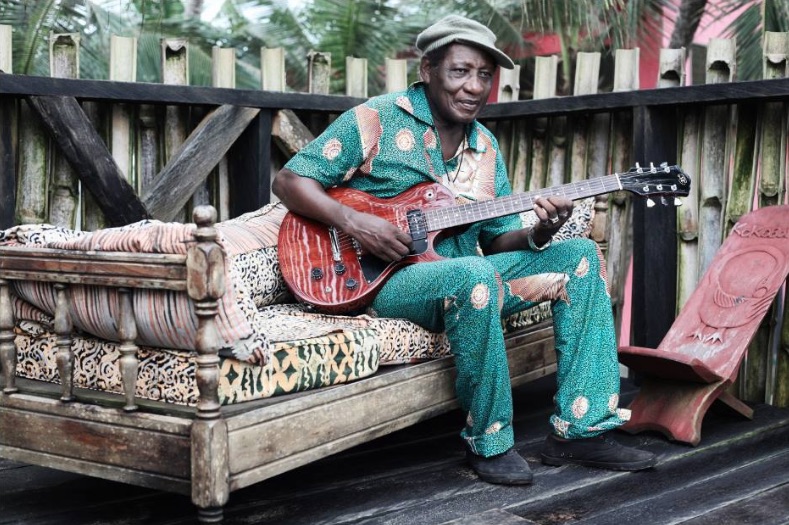
For Ghana, one such giant was Ebo Taylor, the legendary guitarist, composer, bandleader and producer whose music helped define the soul of Ghanaian highlife and Afrobeat for more than six decades.
To many, he was simply “Uncle Ebo.” But in the history of African music, he stands as a pioneer, a cultural ambassador, and one of the continent’s most influential musical minds.
AI
Born in Cape Coast, Destined for Musical Greatness
Born Deroy Taylor on January 6, 1936, in Cape Coast in Ghana’s Central Region, Ebo Taylor grew up in a community where music and culture were deeply woven into everyday life.
In this historic coastal town, music was not merely entertainment, it was an expression of identity and community.
Taylor’s musical journey began early. At just six years old, he started learning the piano, revealing a remarkable ear for melody and harmony. What began as childhood curiosity soon blossomed into an extraordinary talent that would later flourish through his mastery of the guitar, songwriting and musical arrangement.
As Ghana approached independence in the late 1950s, a vibrant musical movement was emerging alongside the country’s political awakening.
Highlife music, with its energetic rhythms and rich blend of African and Western influences was rapidly becoming the nation’s soundtrack.
Taylor emerged at precisely the right moment.
He soon joined influential bands including the Stargazers and the Broadway Dance Band, where his refined guitar work and sophisticated arrangements quickly earned him admiration.
Those early performances would later prove to be the foundation of a musical revolution.
London- Meeting Fela Kuti and the Birth of a New Sound
In 1962, Taylor travelled to London with the Black Star Highlife Band to further his musical education and immerse himself in global sounds.
While there, he encountered another young African musician who would later become a giant in world music — Fela Kuti.
Together, they explored jazz structures, harmonies and the possibilities of African musical innovation.
Although exposed to Western musical traditions, Taylor remained firmly rooted in Ghanaian highlife. Instead of abandoning his heritage, he fused those influences into a new sound grounded in African rhythms.
His philosophy was simple but powerful: African music could evolve, but it must never lose its roots.
The Architect of Afro-Funk Highlife
Upon returning to Ghana in the mid-1960s, Taylor began experimenting boldly with musical fusion.
He blended:
•Ghanaian highlife rhythms •Jazz harmonies •Funk grooves •Afrobeat influences
The result was a distinctive sound widely described as Afro-funk highlife.
As a producer and arranger, he also shaped the music of legendary artists such as Pat Thomas and C. K. Mann during his time with the renowned Essiebons Record Label.
Ebo Taylor
Behind the scenes, Taylor became one of the most influential architects of Ghana’s recording industry.
When the World Rediscovered Him
Although already a legend in West Africa, Taylor’s music gained renewed global attention in the 2000s when international labels began reissuing classic African recordings.
His 2010 album Love and Death introduced a new generation of listeners to his brilliance, followed by Appia Kwa Bridge (2012) and Yen Ara (2018).
Soon, producers around the world were rediscovering his catalogue.
His music was sampled by global stars including:
•Usher •The Black Eyed Peas •Kelly Rowland •Jidenna •Vic Mensa •Rapsody
Through these samples, the rhythms of Cape Coast and Accra travelled into clubs, studios and playlists across the globe.
Taylor quietly became one of Africa’s most sampled musicians.
A Legend Who Never Stopped Creating
Even in his later years, Taylor’s creative spirit remained unstoppable.
Despite suffering a stroke in 2018, he continued recording and collaborating with younger musicians.
In 2025, he released the project Jazz Is Dead 022, continuing his lifelong exploration of jazz, funk and African rhythms.
It was proof that legends never retire, they simply evolve.
The Final Journey
On February 7, 2026, Ghana and the global music community lost one of their brightest cultural lights.
Ebo Taylor passed away at the age of 90 at Saltpond Municipal Hospital, just a day after the launch of the Ebo Taylor Music Festival created to celebrate his legacy.
The timing felt almost poetic.
A festival honouring his life had just begun, and the man himself had taken his final bow.
Tributes poured in from around the world, describing him as a colossus of African music.
By: Joseph Owusu Worae/3news
Advertisement
Sponsored