Introducing Amazon Supply Chain Services: Amazon’s logistics network, now open to every business
Any business can now move, store, and deliver everything from raw materials to finished products using the same supply chain that supports Amazon and its independent selling partners.
Advertisement
Sponsored
Nearly three decades ago, Amazon made a bet that fast, reliable delivery was more than just a perk—it was core to providing an exceptional shopping experience for consumers.
To deliver on that bet, Amazon began building what would become one of the most reliable and efficient supply chains on Earth—from freight that moves cargo across air, land, and sea, to fulfillment centers that pick and pack millions of orders a day, and a parcel shipping network that delivers packages every day of the week. Its success required long-term thinking, advanced technology, and relentless focus on execution.
This story may sound familiar. Amazon built another major offering—cloud infrastructure—for the same reason: to run its own business better. And then Amazon started selling it. That’s how Amazon Web Services (AWS) was born, and it's transformed how the world builds and runs software. Now, Amazon is ready to do that for supply chain.
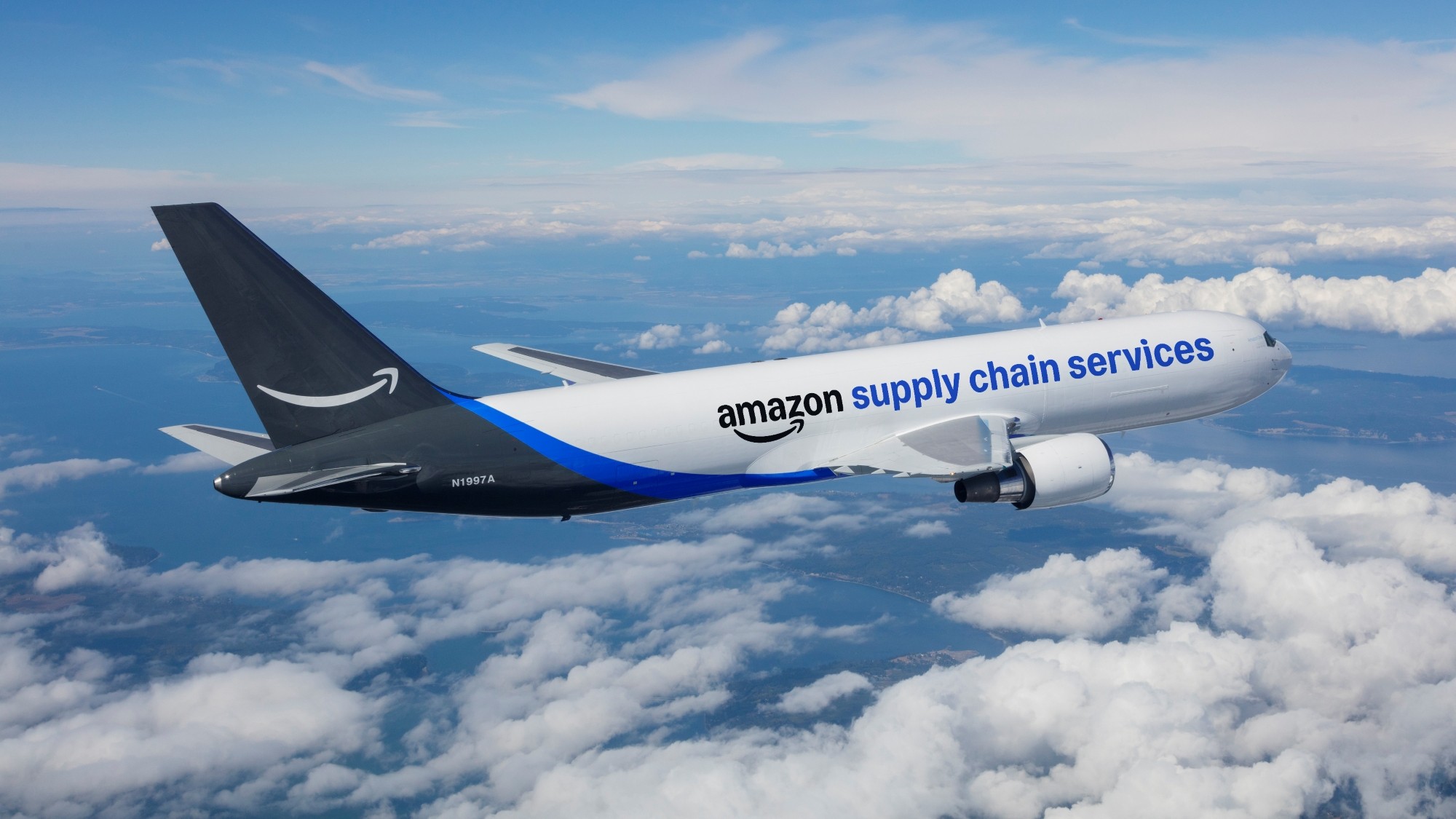
Today, Amazon is announcing Amazon Supply Chain Services (ASCS), opening its full portfolio of freight, distribution, fulfillment, and parcel shipping capabilities to businesses of all types and sizes, not only Amazon sellers. With this launch, Amazon is expanding its third-party logistics capacity to support businesses in industries such as healthcare, automotive, manufacturing, and retail.
“Amazon is bringing the infrastructure, intelligence, and scale of its supply chain services—proven over decades—to businesses everywhere, much like Amazon Web Services did for cloud computing,” said Peter Larsen, vice president of Amazon Supply Chain Services. “Supply chain wasn’t just a function at Amazon—it was core to providing an exceptional shopping experience. Our differentiator. The reason we could offer fast, dependable delivery that nobody else could. And with the launch of ASCS, we’re confident we can give any other business access to the same cost efficiency, reliability, and speed that we’ve built for Amazon customers.”
How Amazon selling partners proved the model
Proof that Amazon’s logistics network could work for others came from its own selling partners.
Since 2006, independent sellers have shipped more than 80 billion units with Fulfillment by Amazon (FBA). Sellers came to Amazon because fulfilling orders on their own—picking, packing, shipping, handling returns—was operationally intense and expensive. With FBA, they could hand that work to Amazon and focus on building their businesses. It worked.
But Amazon knew fulfillment was only part of the challenge. Getting products to Amazon's fulfillment centers in the first place—shipping from overseas factories, clearing customs, storing inventory in bulk, and distributing across multiple sales channels—was just as complex. Each of these steps meant a different provider, a different contract, and limited visibility into what was happening with their products.
So Amazon kept building to help sellers solve those problems—adding new capabilities at each stage of the supply chain and then connecting them into a fully automated set of services that move sellers’ products from factory to customer doorstep through a single network. Today, Amazon supports hundreds of thousands of sellers, moving billions of items worldwide annually. Sellers using these end-to-end solutions see nearly 20% higher sales.
"Amazon has added value at every stage of our supply chain from cross-border logistics to warehouse storage and parcel shipping,” said Todd Bairstow, founder of Finer Form. “We’ve been able to save money, eliminate operational complexity, and it’s given us more time to focus on what matters: building our brand. Honestly, there wouldn't be a Finer Form without Amazon."
This success with selling partners led Amazon to a natural next step: gradually making individual logistics services available for retail, wholesale, and commercial businesses of all types. Over the past three years, hundreds of thousands of Amazon sellers have trusted the company’s logistics network to move, store, and deliver hundreds of millions of packages across third-party facilities, warehouses, and sales channels beyond the Amazon store. And these results gave Amazon the conviction to go further and offer these same services to any type of business.
How Amazon Supply Chain Services can work for your business
Whether you are a small retailer looking to grow your customer base on the Amazon store or a global manufacturer looking to efficiently distribute raw materials to production facilities—ASCS gives you the flexibility to choose the services and level of support you need. Announced today:
Procter & Gamble is using Amazon’s freight services to transport raw materials to production facilities and move finished goods across its distribution network.
3M is using Amazon’s freight services to move products from its manufacturing sites to distribution centers worldwide.
Lands’ End is using a unified inventory pool within Amazon’s network to fulfill orders across multiple sales channels.
American Eagle Outfitters, Inc. is using Amazon’s parcel shipping network to deliver online orders from its American Eagle and Aerie website directly to customers nationwide.
“Amazon is one of our key ecommerce partners, and we’re excited to leverage Amazon Supply Chain Services to position inventory closer to customers so we can reach them even faster,” said Andrew McLean, CEO of Lands’ End. “This consistency is central to our solutions-based approach, enabling us to serve customers with confidence and agility, especially during peak seasons.”
Advertisement
Sponsored