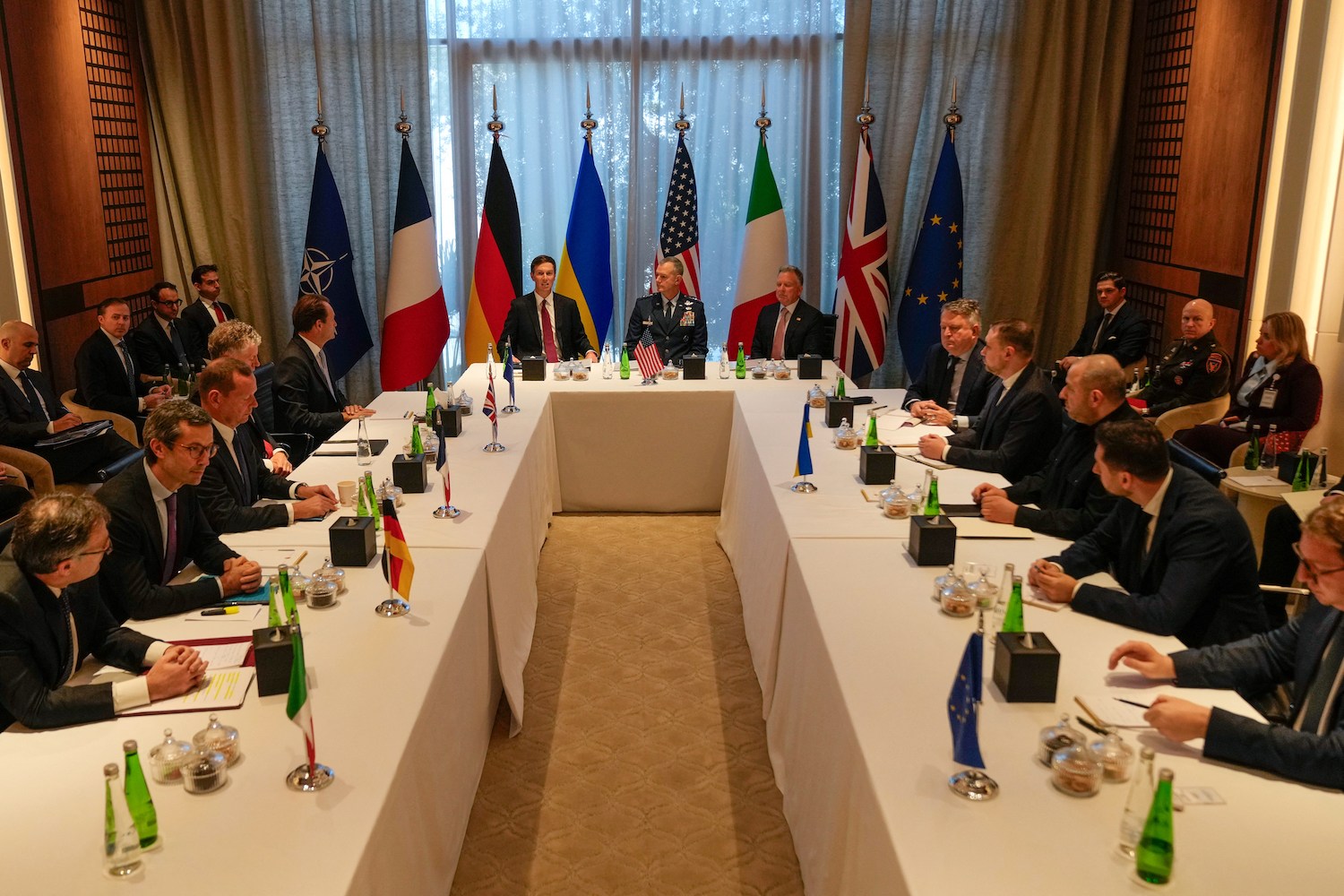
Trilateral talks in Abu Dhabi between Russia, Ukraine and the US aimed at ending the war in Ukraine have concluded after a second day.
Although the American side said they saw "some openings", there was no hint of any breakthroughs to end the nearly five year-long war.
However, both Moscow and Kyiv confirmed that a large-scale prisoner of war exchange was in the works and could be carried out soon.
Davyd Arakhamia from Ukraine's negotiating team said that this round of talks - the first since February - "was one of the hardest."
"I believe the Russians came with very strict directives, so it was extremely difficult to soften the discussion," he said. But he added that he felt "good momentum" and urged for a second round of talks to be organised as soon as possible.
Comments by Kremlin negotiator Vladimir Medinsky were less conciliatory. "Right now... a lot depends on Ukraine, on the position of the US, and on whether Europe comes to its senses," he said.
After the talks it was announced that on Thursday US negotiators Steve Witkoff and Jared Kushner - President Donald Trump's son-in-law - would travel to Moscow to meet Russian President Vladimir Putin, and then to Dublin to speak to Ukraine's Volodymyr Zelensky.
The meetings in Abu Dhabi had been framed as centred around the "security architecture" of Europe.
For Kyiv, this may include reassurances that allies will come to its aid if Ukraine comes under attack again, despite the country not being a Nato member.
For Moscow, a reworked "security framework" is likely to include a limit to the influence of Nato in eastern Europe - a central concern for the Kremlin since the alliance's eastward expansion.
Earlier this week Kushner said the US hoped to "create a new framework" of security between Ukraine, Russia and Europe that could "secure lasting peace", while the Kremlin's Medinsky said the world needed a "new" and "fair" security system.
That framework would serve as "a new Yalta and Potsdam", Medinsky said, referring to the 1940s summits in which the victorious Allied powers carved up post-war Europe into spheres of influence.